Otto Shapes Up for the Digital Future, Replacing Print Catalogue with App

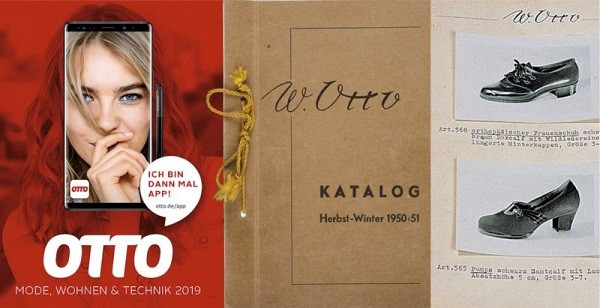
When it was first hand-produced in 1950, the Otto catalogue was distance-selling in its purest form – and an attack on the bricks-and-mortar shoe trade. In subsequent years as the company grew, the Otto catalogue came to represent for German households the way to reflect existing fashion trends, and set new ones.
In November 2018, the family-owned business – by now Germany’s largest mail-order company – printed the final few million copies of its spring and summer 2019 edition. It was an end of an era. The famous Otto catalogue would be no more...
But the passing of the print version of the Otto catalogue isn’t sounding the death knell for the giant European conglomerate. Rather, it signifies evolution, and the commencement of a new chapter in the organisation’s development, as the Otto Group looks forward and intensifies its efforts at creating and sustaining a digital future.
Transformation Requires A Willingness to Change
After Amazon, Otto is the second-largest ecommerce player in Germany. The organisation’s decision to axe its iconic catalogue and shift its functionality to an app was a response to changing times and changing circumstances, rather than any reflection on the success or otherwise of the Otto Group.
According to Marc Opelt, Chairman of the Otto Board and Management Board for Marketing, “We haven’t put an end to the catalogue, our customers have. Data show that they use it less and less and that they have quickly found their way online.”
Already, 97% of all Otto purchases are made online, signalling its transformation from a big mail-order player to a unique and worldwide ecommerce business. Even in the digitally conservative market of Germany, organisations such as Neckermann (one of Otto’s competitors) that have failed to adapt to the new digital reality have fallen by the wayside.
In recognition of this shift, Otto is promoting transformation as it shapes up for a digital future.
For Otto, this isn’t such a radical move. The organisation has a tradition of pioneering change. In the 1950s, for example, the company paved the way for ordering on account (or on credit), increasing sales significantly. And in the early 1960s, Otto began offering a telephone ordering service.
During the 1970s, Otto beat Amazon by several decades in establishing their own delivery company, Hermes, which currently numbers Amazon among its clients. More recently, the company recognised a market need for express 24-hour delivery, introducing this service in the 1990s. And in 1995 – the early days of the internet – Otto launched its first website, becoming one of the first online shopping platforms.
The Otto Group Invests in Technology and Innovation
The Otto Group continues to invest in technology and innovation. In 2015, the Group appointed the first ever Otto CIO – Senior eCommerce expert Dr. Michael Müller-Wünsch – who, at the time, set out the organisation’s focus in this way: “Changes in consumer behaviour are always technology-driven, which is why we investigate the latest technological opportunities at an early stage and evaluate their potential and benefit for the customer.”
To this end, Otto has set up an “innovation forge” known as Liquid Lab, which develops new service concepts for ecommerce. Otto has developed and tested new online concepts for a wide range of target groups, predominantly in the fashion and lifestyle segments. One example is the highly successful About You fashion platform.

Otto recently introduced responsive design into its web properties. This allows one standard site to be viewed on any device – be it desktop, laptop, tablet, or smartphone – with the site adapting itself automatically to fit the particular screen size.
The Otto Group also participates in the venture capital space, and in the area of business incubation. The organisation currently holds shares in over 100 startups around the world – a figure that’s set to rise.
Digital Transformation from Within
Besides research and external investment, the digital transformation of Otto is proceeding from within the organisation itself, and relying on its own in-house expertise. In this way, the company’s developments in areas such as ecommerce, business intelligence, and online marketing can be tailored completely to its needs, maximising flexibility, and allowing for agile development to continue.

For its internal operations, Otto relies on the help of self-learning algorithms and other emerging technologies. Predictive analytics technology allows the organisation to reduce residual stock levels while simultaneously increasing deliverability rates. Besides improved operational results, this also produces greater customer satisfaction. And in terms of sustainability, more accurate merchandising makes an important contribution to the efficient use of resources.
Otto Fosters A Digital Culture
To continue appreciating its benefits, digital transformation itself has to be sustainable. Creating a corporate digital culture that takes in all stakeholders is one way of guaranteeing this.
At Otto, digital transformation has always been taken as a cultural matter, treating the need to win employees around to the idea that the transformation process is never complete as a top priority. In fact, the company’s maxim “We are shaping the digital future” was developed as a unifying guiding principle through a participative process involving the consultative input and votes of 4,350 Otto staff.
Otto’s ongoing commitment to a digital culture and future is reflected in a programme called ROT4 – an employer campaign aimed at those who are passionate about working on the future of online shopping. Speaking of the scheme which was launched in 2015, Katy Roewer, a member of the Otto Management Board for Service says: “We deliberately want to appear different to how people expect Otto to be, and are bold in the way we communicate about our ecommerce and IT expertise. With ROT4, we are showing potential applicants what’s in store for them: teams and colleagues who are together shaping the future of ecommerce.”
Digital transformation is set to be a hot topic at eTail Germany 2020, taking place in March at the Intercontinental, Berlin. Download the agenda for more information and insights.